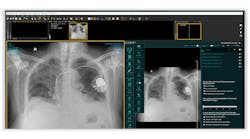





Before implementing an electronic health record (EHR) in mid-2006, the Center for Bone and Surgery of the Palm Beaches in West Palm Beach, Fla., was composed of nine orthopedic surgeons who saw about 300 patients daily at four locations. Since then, the EHR has become an indispensable tool in helping increase patient encounters by 25 percent annually while holding down administrative and clinical support cost increases to just 5 percent a year. From our initial research we expected the EHR to enhance quality of care and efficiency and reduce labor costs and we achieved all these benefits except labor savings. However, that’s because we opted to re-deploy more than half of our 10 full-time medical records clerks and utilize existing clinical employees to increase patient visit volume by up to 25 percent per physician by using physician assistants. Turbo Charging Growth
We also selected our EHR because of its flexibility and scalability. For instance, we can open an office within 30 days of signing a lease because we can quickly and seamlessly set up the EHR (and PM) system without adding computer servers. This has enabled us to fully integrate a new office and to ensure immediate access to all patient records at a new location from day one. Before EHR, it took us at least 120 days to open a new location. Now, all we need are additional user licenses and a high-speed wide-area connection to be up and running. We also can quickly shift clinical and administrative staff from site to site when a disaster, such as a hurricane, shuts down a single office — a key consideration in Florida. We estimate that we recouped our EHR investment within one year. Furthermore, we expect to realize even greater savings and efficiencies over the next two years when we replace our existing practice management (PM) software with an integrated EHR/PM solution. Minimizing Disruption To eliminate on-site storage of paper charts, we scanned our 50,000 records in 2006. During this period, each physician was trained and went live using the system one at a time for two weeks. After that five-month training period, our physicians were using the EHR exclusively. Although some physicians initially resisted, once they saw that the EHR truly helped them provide better, safer and more efficient care, they became enthusiastic users.
Further Gains to Come
Many practices consider implementing an EHR to grow their practice, but they may not realize the full range of benefits it can provide. I am 100 percent confident that without our EHR, we would never have achieved the ongoing expansion of our core practice or our move into pain management and anti-aging — new service areas with tremendous growth potential. Early on, we would have collapsed under the associated administrative demands instead of thriving as a dynamic, highly successful, patient-centered practice. David Klebonis is executive manager, Center for Bone and Joint Surgery of the Palm Beaches in Wellington, Fla. Contact him at david.klebonis@boneandjoint.org. Next - Consumers Need All of the Facts in the Electronic Health Record Privacy Debate |
||||||||