




Getting started with cloud computing

Offloading ancillary applications helps data center expand without adding cost or staff.

When Emory Healthcare in Atlanta began advancing its disaster recovery (DR) plan to include a complete remote backup data center, its staff had two choices: build the data center themselves or co-locate at a premium facility. To build its own data center, Emory would have to focus on many items such as power, cooling, networking, building codes, uptime, around-the-clock staffing and future expansion needs, all functions which are not its core business of providing healthcare.

After a year-long analysis, the IT team decided the capital costs were just too exorbitant. The physical plant was the biggest cost, and it simply didn’t make sense to invest time and money when Emory had a high-grade data center nearby. That high-grade data center, the GNAX Health primary data center called AtlantaNAP, was the first step in Emory’s journey from in-house data computing and storage to a private healthcare cloud.

In addition to meeting the organization’s DR needs, the IT department was facing budget cuts. Like many other healthcare IT departments, there just wasn’t enough money to do everything the team had in mind. Emory needed alternative ways to deliver new applications and meet long-term IT goals, while also maintaining FTE neutrality.

Emory is a large academic medical center, and the IT department receives requests for new niche applications frequently. The bottom line: Emory’s data center was expanding, but its budget wasn’t.

Solution

Emory’s IT team identified a list of second-tier niche applications within their data center that required large amounts of technical attention. Although each application comprised a small amount of space, altogether they occupied a significant amount of IT resources. And unlike the organization’s core clinical and financial systems, if one of these applications was down for a day, patient care could go forward and bills would continue to go out the door.

To alleviate staffing and cost pressures, the team partnered with their hosted data center provider to build a private healthcare cloud for Emory. This provider not only manages the systems and data, but also the relationship with the application vendors.

Emory has many niche ancillary applications, and in working with these smaller companies, the IT team learned that they lack the staff and development teams to keep up with leading-edge technology. By offloading these niche applications to a private healthcare cloud, Emory receives guaranteed uptime without having to juggle multiple vendor support lines, daily backups or system upgrades.

Results

Within two years of Emory’s initial foray into a hosted data center, IT costs have been reduced in a number of areas, new applications have been implemented and a significant burden has been lifted from IT department staff. And as Emory’s data center needs have grown, no new staff members have been added.

Lowering costs

In the past, Emory was paying two different IP service providers to get redundant network access. The outsourced data center provides a highly available bandwidth connection to all of Emory’s locations, helping the organization eliminate one of its previous carriers and reduce bandwidth costs by 50 percent.

Overbuying hardware and unused server capacity is no longer an issue. These niche applications are distributed across a number of servers within a private healthcare cloud-computing environment, making the most of every resource. This step has further reduced Emory’s annual budget for system hardware by 30 percent.

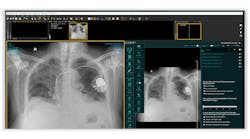
By virtualizing niche applications, the IT department was able to move software and hardware expenses from the capital budget to the operating budget. For one system now hosted in Emory’s private healthcare cloud, a cardiology imaging application, the hosted data center is also archiving all images produced and managed by the application. This saves Emory 60 percent in recurring costs on a monthly basis over the previous storage solution for this application.

Finally, as new niche systems are added, applications are virtualized in Emory’s private healthcare cloud. Instead of paying for software and hardware up front, the IT team requests that vendors deliver software as a service (SaaS) within Emory’s private cloud environment.

Reducing risk

By moving to a certified, hosted data center, Emory receives high-grade physical security along with the latest IT safeguards such as: data encryption, firewalls, intrusion detection systems, multiple power redundancies and around-the-clock armed security. HIPAA privacy and security compliance for these applications is completely monitored and maintained by the vendor.

Keeping staff

It is difficult for healthcare organizations to keep valued IT staff in today’s competitive environment. The healthcare IT employee pool is dwindling, and with demand predicted to grow 20 percent a year until 2018, that is not likely to change.

In Atlanta, Emory vies for the same IT resources as all the other healthcare providers. Emory’s staff is kept focused on new enterprise strategic initiatives and what’s next for the organization since much of the organization’s day-to-day system maintenance has been offloaded. The IT team remains interested, challenged and engaged.

Moving forward

On-premise hardware and software is quickly becoming a thing of the past. Savvy IT departments, such as Emory’s, are beginning to test the waters of cloud-based technology options, thus moving closer to materializing the vision of healthcare IT as a service.

Yes, there are security concerns. Yes, there are objections. But within the next few years, healthcare CIOs may not have a choice. They will be forced to find new ways to solve the day-to-day problems of data center operations and application delivery.

By testing the cloud one step at a time, CIOs are assured a safe and secure migration to a new, more cost-effective model for healthcare IT
delivery.

GNAX Health

User Rating: / 0
PoorBest 

Add comment

Please view the NP Communications, LLC Privacy Statement link at the bottom of this page for information on the comment policy.


Security code
Refresh

Current Issue

Search HMT