

Classified

Arcadia Solutions

Computerized Patient Records/EMR

Med Records Institute

Electronic Data Interchange(EDI)

Intersystems Corp

Financial/Billing Systems

Caremedic Systems Inc

Hardware-Printers/
Copiers/Scanners

Pfu Ltd/Fujitsu

Samsung Electronics

Hardware-Tablet PCs/Laptops

Panasonic Toughbook

Laboratory Systems

Psyche Systems Corp

Networks/Network Management

Hewlett Packard

Other Products & Services

Claremont Graduate Univ

Point-of-Care/Mobile Systems

Dell Inc

Radiology Systems/
Diagnostic Image Management/PACs

Carestream Health Inc

CDW

Voice Recognition/
Transcription

Dictaphone Corp

Wireless Technology

Verizon Wireless

• July 2008 FEATURE ARTICLES •


 The Healthcare CIO

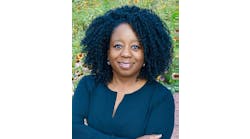
 C. Martin Harris, M.D., MBA


C. Martin Harris, M.D., MBA

Chief Information Officer, Cleveland Clinic

Q HMT: What is the role of today’s CIO, and how might it change in the future?

"I think we’re in a transition period from a physical integrated delivery system to a virtual integrated delivery system that’s capable of serving and meeting the needs of patients and physicians on a regional, national or international basis. The challenge for the healthcare CIO will be moving from the focus on implementing the electronic medical record and all of its components, to providing the same service for patients no matter where they are. This involves building a toolset that will help CIOs create this virtually connected integrated health delivery system model. They have to go from being an internal operations expert to someone who’s interacting with patients and physicians, and who is virtually connected across regions, nations or the world.

"You’re a change agent, because you must create tools that are not normally part of the CIO’s skill set, but which are required to enable a virtual integrated delivery system. That’s fundamentally dependent on the delivery of new HIT tools, not just for the employees inside an organization, but also for patients wherever they are, especially when they’re at home, and for physician collaborators that are not part of your organization but are virtual participants in a shared-patient’s care.

"The CIO has to develop a skill set that’s consumer/customer oriented versus being operations oriented. These are the new responsibilities that are going to be required of a successful CIO over the next five years."

Q HMT: What about the CIOs of smaller healthcare organizations?

"Once we enable these virtually integrated delivery systems, I can see smaller hospital organizations that are virtually integrated with larger ones like the Cleveland Clinic. The CIO of a smaller hospital will be responsible for integrating upstream so that the patient experience isn’t interrupted and all of the physicians involved in that patient’s care have the information when and where they need it."

Q HMT: How should IT managers and directors prepare to take on the CIO role?

"Although their IT skills will be very important, understanding the concepts and principals of operations in the current model of healthcare delivery inside the hospital and physician’s office is equally important, as well as learning what it means to a doctor to care for patients when they’re not physically present. That understanding will enable the CIO to guide the development of tools that will be required to deliver practical medical care in the 21st century."