



|
From the May 2007 Issue The Perfect Marriage: Case History Will Big Brother Save Healthcare?
|
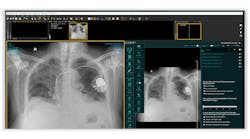
EMR ROI A Pennsylvania family practice’s investment in an EMR pays off three-fold. By William R. Sonnenberg, M.D., F.A.A.F.P. Information technology and computers have always fascinated me, so it came as no surprise to my friends and colleagues that after twenty-three years in medical practice, I transitioned two years ago from using paper to an electronic medical records (EMR) system. After all, as a self-proclaimed “geek” who dabbled with the early personal computers while taking medical courses, acquiring the newest technology was simply the logical next step. In Titusville, Pennsylvania, where my family practice is located, I was among the first doctors to purchase an EMR platform. Our office also held the distinction of changing to an electronic billing system before any of our local hospitals. However, my decision to install an electronic billing system, and later an EMR system, was based less on a desire to acquire the latest technology than on the need to operate more efficiently, accurately and profitably. On a weekly basis, I see approximately 140 patients of all ages. For a practice with one physician and three staff members, administering to such a large patient base can be challenging. Fortunately, the efficiencies I have realized through the EMR and electronic billing systems have significantly enhanced my operations, receipts and information flow. As a matter of fact, my experience with an EMR system has been so positive, that I have given lectures across the country to trade shows, CME events and national meetings on the multiple benefits of this technology. Choosing the Right EMR A reality of medicine is that it doesn’t matter how smart you are or how brilliant your diagnosis; you don’t get paid any more money for those things. In medicine you get paid for how much you can document. Paper systems are slow and lack versatility. For example, if a patient’s X-rays had been done at a hospital, I would have to wait until they arrived at my office before I could examine them and make a diagnosis. With my EMR system, I can now pull up their hospital X-rays, look at images and then share them with the patient in the exam room. If it’s easier for a physician to access an X-ray or chart, you are going to use more information more often and expose the patient to fewer potential errors. Although thoroughly researching available EMR platforms is always the best course, I primarily looked for compatibility with my Companion PM electronic billing system and its inclusion on the list of acceptable platforms agreed upon by the American Academy of Family Physicians. Based on those benchmarks, I chose Companion EMR through Columbia, S.C.-based Companion Technologies as my EMR. Installation, Implementation and Training If it’s easier for a physician to access an X-ray or chart, you are going to use more information more often and expose the patient to fewer potential errors. There were many bugs that had to be worked out during the installation process, which involved merging multiple computer components. Specifically, the main computer had to be connected to the billing computer, laptops and peripherals. My expenses included purchasing a new central computer, two laptops and software. The hardware/software purchase was in excess of $50,000, while the lead system is leased. The combined costs for the entire EMR system amounts to approximately $1,500 a month. The EMR in Practice A reality of medicine is that it doesn’t matter how smart you are or how brilliant your diagnosis; you don’t get paid any more money for those things. In medicine you get paid for how much you can document. My EMR allows me to get the improved procedure codes and that translates into income enhancement. Essentially, the system makes it easier to document everything we do, which leads to better reimbursement. I have heard that the typical physician provides a level four service; bills for level three work, and documents work at level two. Since adopting an EMR system, my practice receipts have increased about $4,000 per month. In my medical practice, I often see the same patients again and again. With EMR, things happen faster. For example, I can have 80 to 90 percent of a repeat patient’s progress notes completed before I enter the room. The old process involved writing or dictating progress notes each time these patients came in for a routine checkup. My EMR copies the old notes automatically and I change things that are different about the current visit. The Future of EMR In my town, younger doctors seem more reluctant to adopt the new technology than the older ones. This can partially be attributed to a fear of the start-up costs. A doctor twelve years my junior told me, “If papyrus was good enough for the Egyptians, it’s good enough for me.” During my twenty-three years in practice, I have become more used to change, having endured DRG, HIPAA, HMO and PPO. I find it a pleasure to experience a change that will lead to real improvements. I believe EMRs are the future and medical practices that adopt this technology sooner rather than later will realize real savings and benefits. The return on investment can be measured in saved time, error reduction and income enhancement. Yes, the initial costs can be daunting, but for every $1 put into my system, I have received approximately $3 in return. ______________________________________________________________________________________________![]()
William Sonnenberg, M.D. is based in Titusville, Pennsylvania.
|