





|
From the February 2006 Issue
2 + 2 = Benefits by the Dozen Putting Meat on the e-Prescribing Bone
|
Putting Meat on the Maryland-based CareFirst re-ups for a second year of e-prescribing for its network physicians. By Robin Blair, Editor
In Owings Mills, Md., CareFirst BlueCross BlueShield did pay for it. The health plan gave PDAs to 500 physicians, along with one-year licenses for e-prescribing software. The organization also designed its e-prescribing pilot in a way that garnered concrete statistics upon which to decide the future of the program and, in the fourth quarter last year, announced plans for a second year of supported e-prescribing for network providers, along with some impressive stats from the first year. Tactical Operations Director Pete Stoessel, who works in CareFirst’s medical affairs and networks management department, says the health plan’s decision to fund the technology giveaway was based on a twofold goal. First, the health plan wanted to encourage providers to use information technology; second, CareFirst wanted to nurture and augment its existing provider relationships in a visible way that would simultaneously demonstrate its own support for IT. CareFirst is the largest healthcare insurer in the Mid-Atlantic region, with approximately 3 million members served by more than 6,000 employees in Delaware, Maryland, North Carolina, West Virginia, the District of Columbia and northern Virginia. The Right Fit Finally, CareFirst preferred the speed and layout of the DrFirst application to others it tested. “That was significant, because it addressed one of the big hurdles. I don’t care how free a product is. Doctors won’t adopt it if it doesn’t fit into their practice style and workflow.” Internally, Stoessel says support for the IT subsidy was two-tiered, and that projected savings from the pilot occupied the second tier, not the first. “We have implemented programs that have saved 50 times what this program saved,” he says. “Saving money is important, but it wasn’t the only factor. In our case, e-prescribing was the right fit for everyone in the equation. It would benefit our providers to use information technology, and it would strengthen our patient safety initiatives for members.” In addition, the IT adoption would streamline and eliminate phone calls and faxes between pharmacies and office staff, and would demonstrate to the employer community a commitment to technology-supported healthcare. Early Lessons “That’s why they call it a pilot,” says Stoessel, explaining an early lesson learned from the selection of physicians. An individual practice of five physicians might include three at the high-prescribing end, and two physicians who are moderate or infrequent prescribers. CareFirst decided to give PDAs and software to all physicians of such a practice, electing not to subsidize some and deny others. In retrospect, “We might evaluate the prescribing rates of an entire practice for a future pilot,” says Stoessel, offering good advice for other health plans as they consider donating hardware and software to providers, now that the legislative restraints are being loosened.
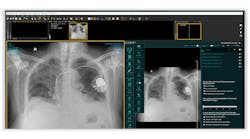
“It’s important to differentiate types of savings,” says Stoessel, “because the only real savings stem from formulary compliance. This is where we can see physicians adhering to formulary or changing their actions to return to formulary. The other two represent potential opportunities for negative results,” and the savings from avoiding those negative results are avoided costs, based on calculating average costs of events that didn’t happen. Training for Success With the software, a physician can generate an electronic prescription and transmit it directly to a patient’s pharmacy, eliminating paper scripts, paper faxes, illegible handwriting and call-backs from the pharmacy. The software offers CareFirst’s complete formulary and also alerts physicians to possible drug-drug and drug-allergy interactions from the medications they prescribe. Finally, the software offers the prescriber access to the patient’s medication history for the past 10 years from the health plan’s claims database.
Trainers from DrFirst handled the training. Director of Account Management and Marketing Irene Froehlich says physician training would typically require one and a half hours per doctor. The physician would learn how to use the Web site and PDA versions of Rcopia to create a “favorites list” of the medications and related dosages he used most often. He also would understand the mail order eligibility function with the system’s link to three major PBMs: Medco, Caremark and ESI. He would be able to use functionality for individual drugs and drug classes, and would learn how to pull a customized report of all patients on a specific drug, in the rare event of drug recalls that required patient notification. Froehlich says the DrFirst teams also trained the practice’s pertinent staff, since they are the ones who typically set up the practice’s pharmacy favorites list, enter allergy information for patients and manage patients’ refill requests. Desired Outcomes For the first year, physicians who were alerted to an off-formulary prescription would back out about 25 percent of the time and take a different, formulary-based course. CareFirst’s medical staff confirms the 25 percent as a respectable outcome, because the software also demonstrated an 83 percent rate of compliance with formulary and 25 percent was consistent with senior management’s expectation of a change level. When physicians received an alert about a possible drug-allergy interaction, they canceled their prescriptions and changed to other medications 30 percent of the time. When it came to drug-drug interactions, they canceled their prescriptions and changed courses 47 percent of the time. Big Gains, Smart Investments CareFirst says it saved nearly $624,000 from the one-year initiative, based on a decrease in adverse drug events (ADEs). In August 2005 alone, the system intercepted more than 540 prescriptions that might have led to ADEs. While the savings are impressive, especially when they represent funds the organization didn’t have to expend, Stoessel says that patient safety was the fundamental issue that sold CareFirst senior management on the e-prescribing program. He says the health plan didn’t offer the software so much to influence or change a physician’s practice style, but rather “to enhance physicians’ practice patterns. We look at this as information physicians normally want to have. We’re giving them the opportunity to keep it at their fingertips.” Last fall, CareFirst announced plans to continue the pilot for a second year. About 60 percent of the pilot’s 500 physicians used their e-prescribing systems enough to qualify for a second year of subsidized licensing fees. To be eligible, a physician had to average 50 prescriptions a month for the course of the 12-month pilot and average 50 monthly prescriptions over the last three months of the project. Those physicians who prescribed less than the minimum for continued license subsidies can still keep their PDAs, but they must pay their own licensing fees for the software next year, albeit at a discounted rate from the vendor. Stoessel is surprised at estimates that only 5 percent of physician practices utilize e-prescribing. Many providers balk, and quite publicly, at the legendary five- and six-figure investments required for EMR and CPOE implementations. The annual cost of e-prescribing software for a small practice lands somewhere in the low-four figures, and the technology can deliver—as CareFirst has proved with data—both financial gain and patient safety gains. Maybe its time is now.
For more information about Rcopia from DrFirst,
|
|